
Written by Andrea Melina Fonseca-Tovar
In October 2025, the 13th Mexican Coral Reef Congress and the 4th Pan-American Coral Reef Congress were held in Cozumel, Mexico, bringing together researchers, students, and reef professionals.
In this edition, we highlight the work of Mariana Núñez de Cáceres García, a student from the Autonomous University of Baja California Sur, who won first place in the undergraduate oral presentation category. Her research is titled “Characterization of the marine slug community on San José Island, Baja California Sur” (Fig 1).
Mariana’s research is especially important because marine slugs, despite playing key roles in marine ecosystems, remain understudied in many regions of Mexico. These organisms help maintain ecological balance through their feeding habits and are considered useful indicators of ocean health, since changes in their abundance can reflect environmental changes. San José Island, in particular, has received very little scientific attention, making this study one of the first efforts to better understand the diversity and distribution of marine slugs in the area.
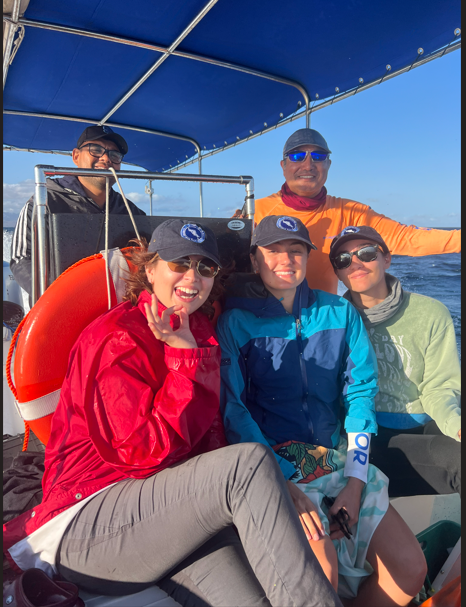
Figure 1. Marina is conducting fieldwork to collect data for this study
What makes heterobranchs unique?
Also known as sea slugs, heterobranchs belong to the gastropod group, which means they are distant relatives of snails (Fig 2). They are characterized by the diversity in the structure of their gills and by the fact that many species have very small shells or no shell at all (Haszprunar, 1985). These organisms live in a wide range of ecosystems, from polar regions to tropical environments, and from shallow waters such as intertidal zones to great depths (Chavanich et al., 2013).
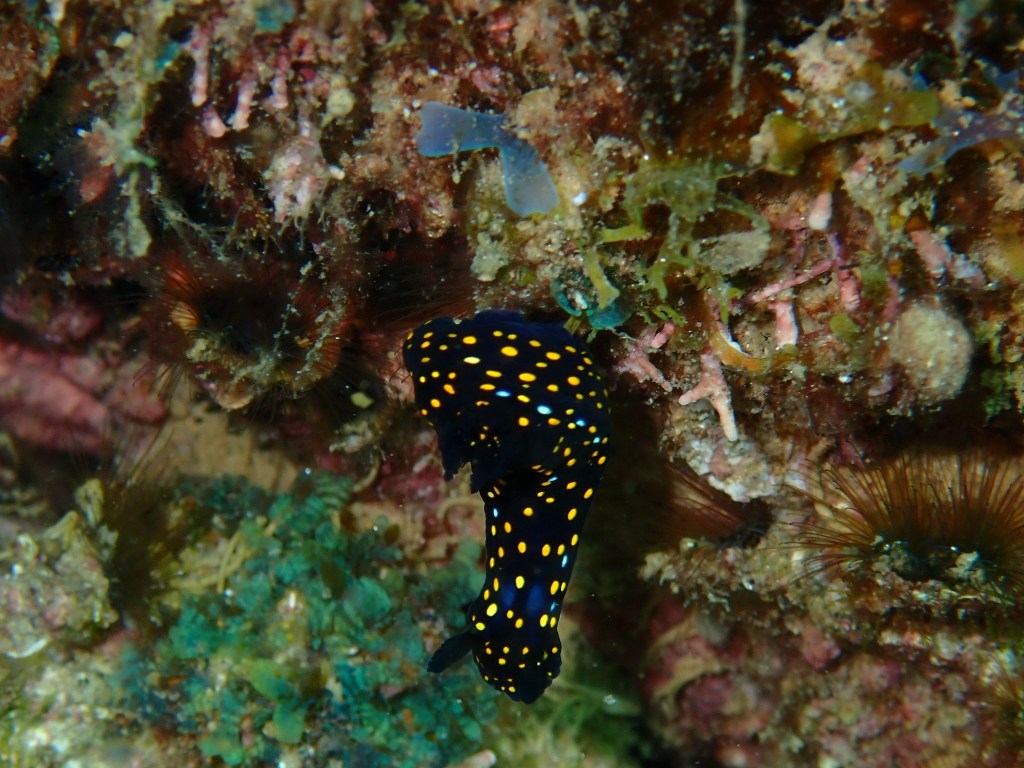
Figure 2. Heterobranch from San Jose Island. Photo taken by Mariana Núñez de Cáceres García
What do heterobranchs eat?
Sea slugs display a wide variety of diets. They feed on algae, sponges, cnidarians such as corals and sea anemones, bryozoans (small colonial animals often called “moss animals”), and tunicates, also known as sea squirts. Tunicates are particularly important because very few organisms consume them. Sea slugs may also feed on polychaetes, bivalves, crustaceans, other gastropods, and in some cases, even exhibit cannibalistic behavior (Wägele et al., 2008). Most heterobranchs are stenophagous, meaning they feed on organisms within the same genus or even a single species (Dionísio et al., 2013). This highly specialized diet, focused on sessile benthic invertebrates, has led various authors to propose them as key indicators of marine ecosystem health. In other words, because many sea slugs depend on very specific prey and habitats, changes in their presence or abundance can reflect changes in the organisms and environmental conditions around them. If their food sources disappear or the habitat is altered, sea slug populations may also decline, making them useful organisms for detecting changes in ecosystem health. Additionally, variations in their abundance are often linked to environmental changes (Adiwijaya et al., 2021).
An understudied ecosystem
Despite the importance of heterobranchs, available studies on San José Island (Fig. 3) are at least a decade old, highlighting the need to update information on their communities and better understand their population dynamics. San José Island is part of the Gulf of California islands, which are designated as Protected Areas of Flora and Fauna. It stands out as a relatively intact ecosystem and one of the few remaining natural laboratories. Despite this, the island has been minimally studied, with limited research on its marine fauna and no specific studies on the diversity of heterobranchs present.
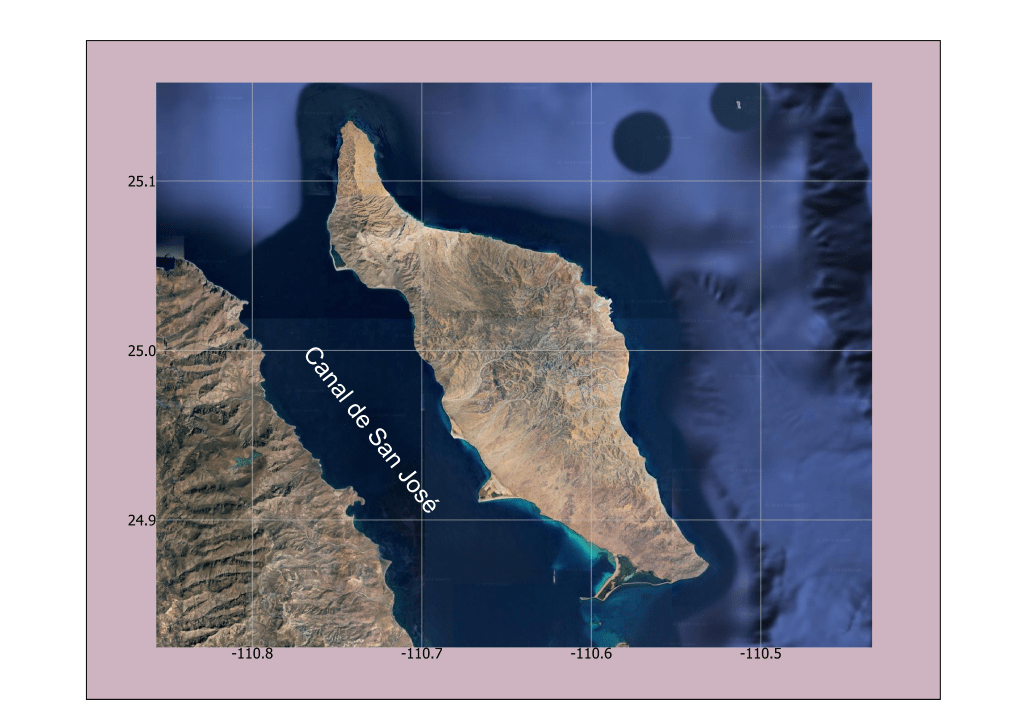
Figure 3. Map of San Jose Island in the Gulf of California. Prepared by Mariana Núñez de Cáceres García
A study on diversity and abundance: Mariana’s project
This study estimates the diversity and abundance of heterobranchs at five sites on the island over an annual cycle, relating these parameters to substrate types and oceanographic variables. To do this, Mariana and her team carried out monthly field surveys at five different locations around the island. During each visit, they recorded the number of species and individuals of sea slugs they found, the types of surfaces and habitats where they were living, and environmental conditions such as water temperature, salinity, and dissolved oxygen.
A total of 119 individuals belonging to eight species were recorded: Elysia diomedea, Felimare californiensis, Felimida norrisi, Felimare agassizi, Chromolaichma sedna, Edmundsella bertschi, Berthellina ilisima, and Rostanga pulchra.
Although data analysis is ongoing, it is expected that diversity will be higher in sites with a greater variety of habitats and surfaces, due to increased availability of food and shelter. Likewise, sea slug abundance is expected to be related to site-specific oceanographic conditions. For example, a higher presence of sea slugs has been observed at lower temperatures. Monitoring efforts will continue to understand better how the distribution of these organisms changes in response to environmental variation.
Acknowledgments
This project wouldn’t have been possible without Grupo Indi’s funding. We are deeply grateful for their trust and support during this project.
For more information about this research, please contact:
Mariana Núñez de Cáceres García
mari.ndcg@gmail.com
Referencias
- Haszprunar G. 1985. The Heterobranchia -a new concept of the phylogeny of the higher Gastropoda. Jour. Zoo. Syst. Evol. Res. 23(1): 15–37. https://doi.org/10.1111/j.1439-0469.1985.tb00567.x
- Chavanich S, Viyakarn V, Sanpanich K, Harris L. 2013. Diversity and occurrence of nudibranchs in Thailand. Mar. Biodiv. 43 (1) https://doi/10.1007/s12526-012-0141-4
- Wägele H, Klussmann-Kolb A, Vonnemann V, Medina M. 2008. HeterobranchiaI. Phylogeny and Evolution of the Mollusca. University of California Press, Berkeley and Los Angeles, California, 385-408.
- Dionísio G, Rosa R, Costa-Leal M, Cruz S, Brandão C, Calado G, Serôdio J, Calado R. 2013. Beauties and beasts: A portrait of sea slugs aquaculture. Aqua. 408–409: 1-14. https://doi.org/10.1016/j.aquaculture.2013.04.033
- Adiwijaya C, Bengen DG, Zamani NP. 2021. Coral reefs substrate composition influence on nudibranch diversity. IOP Conf. Ser.: Earth Environ. Sci. 771 012009. https://doi.org/10.1088/1755-1315/771/1/012009

