
Written by Andrea Melina Fonseca-Tovar
When we consider the threats facing coral reefs, we usually think first of global warming, ocean acidification, overfishing, and coastal pollution. However, a study published in Nature revealed a less intuitive connection: invasive rats on small tropical islands can negatively alter the functioning of nearby reefs.
The research, conducted in the Chagos Archipelago in the Indian Ocean, demonstrates how a terrestrial invasive species can trigger a cascade of ecological effects that cross the boundary between land and sea. At the center of this story are two unexpected characters: rats and seabirds.
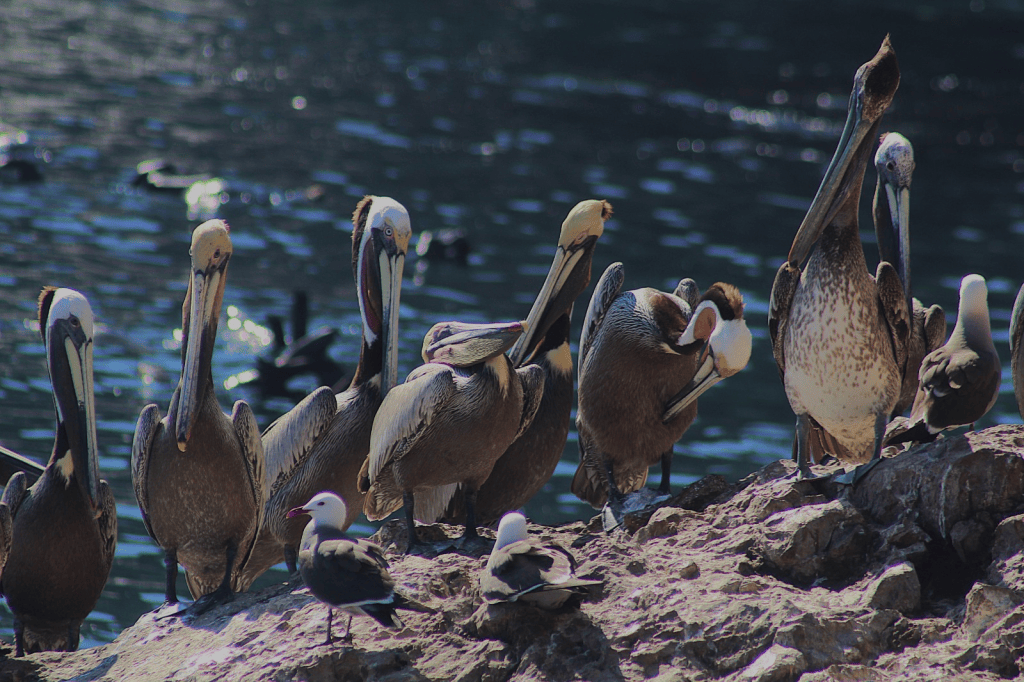
Figure 1. Seabirds. Photo by Luis Fernando Oregel Silva.
A Bridge Between Ocean and Land
Seabirds occupy a unique position in island ecosystems. Many spend most of their lives feeding in the open ocean, capturing fish, cephalopods, and other marine organisms. However, they regularly return to land to rest, nest, and reproduce.
During these terrestrial visits, they transport large quantities of marine-derived nutrients to islands as guano (bird droppings), feathers, food scraps, and other organic matter. This flow of nutrients is known as a nutrient subsidy—resources generated in one ecosystem (here, the open ocean) that are transported into another (the islands) and enhance its productivity. It represents one of the most important links between marine and terrestrial ecosystems.
On many tropical islands, seabirds have played this role for thousands of years. The nitrogen and phosphorus contained in their guano enrich island soils and fuel plant growth. When it rains, some of these nutrients are washed into coastal waters via runoff and groundwater, potentially benefiting nearby coral reefs.
The Arrival of an Invader
Rats initially reached many oceanic islands as accidental stowaways aboard commercial and exploratory vessels. Once established, they encountered seabird populations that had evolved for millennia in the absence of terrestrial predators.
The consequences have been severe. Rats prey on eggs, chicks, and even adult birds, causing dramatic declines in breeding colonies. On many islands around the world, seabird populations have nearly disappeared following the introduction of these rodents.
The Chagos Archipelago, a remote chain of islands in the central Indian Ocean, roughly midway between East Africa and Indonesia, provides an exceptional opportunity to study this phenomenon because some islands have remained rat-free while others are infested (Figure 2). This natural contrast allowed scientists to compare otherwise similar ecosystems that differ primarily in the presence or absence of invasive rats.
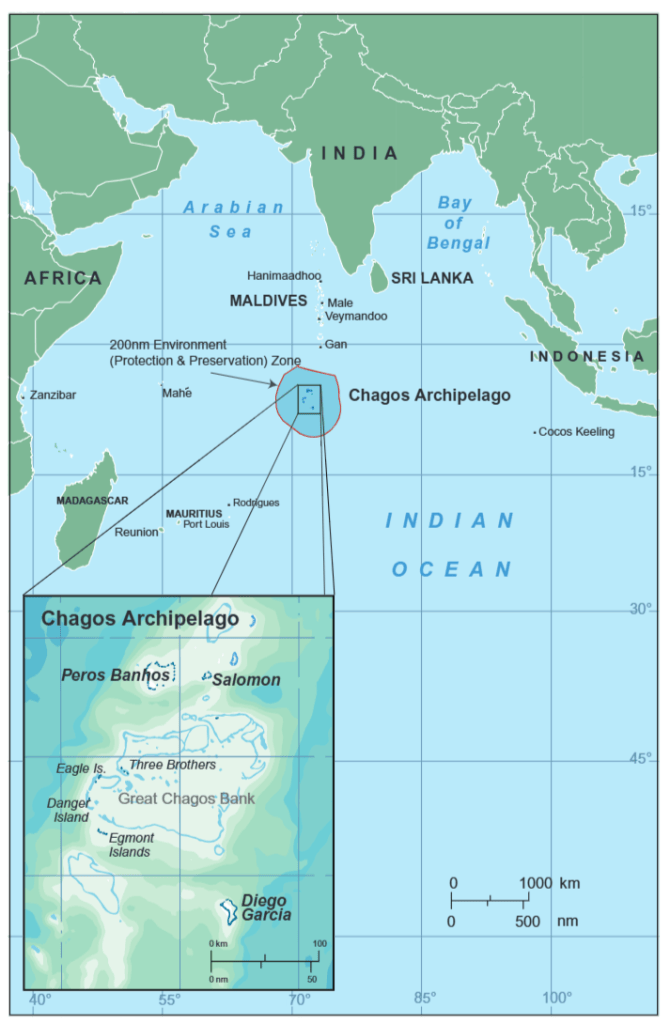
Figure 2. Location of the Chagos Archipelago in the central Indian Ocean. This remote island chain, situated south of the Maldives and approximately 1,600 km from the Indian subcontinent, contains both rat-infested and rat-free islands, making it an ideal system for studying ecosystem connectivity between land and sea. Image reproduced from (Dunne et al., 2014).
Islands With Rats and Islands Without Rats
The results of these comparisons were striking. Rat-free islands had approximately 760 times more seabirds than rat-infested islands. As a consequence, the amount of nitrogen deposited from their guano was more than 250 times greater.
The difference was visible even on land. Soils on rat-free islands were enriched with seabird-derived nutrients, showing stronger chemical signatures of seabird-derived nitrogen compared to soils from rat-infested islands.
Following the Nitrogen Trail
To determine whether these nutrients reached adjacent reefs, researchers used stable isotope analysis. This technique measures naturally occurring forms of elements such as nitrogen. Differences in their relative abundance can act like an ecological fingerprint, helping scientists identify where nutrients came from
The team found clear signatures of seabird-derived nitrogen in multiple reef organisms, including macroalgae, turf algae, sponges, and fishes. In other words, nutrients transported by seabirds from the open ocean were being directly incorporated into organisms on nearby coral reefs. This finding confirmed that seabirds not only benefit terrestrial ecosystems but also contribute to the functioning of adjacent marine ecosystems.
More Nutrients, More Fish
One of the most striking findings was the difference observed in fish communities. Reefs adjacent to rat-free islands supported approximately 48% greater fish biomass (the total mass of fish in a given area) than reefs associated with rat-infested islands. In addition, herbivorous damselfish exhibited faster growth rates.
Herbivores play a crucial role on coral reefs because they consume algae that would otherwise compete with corals for space and light. Faster growth of these key fish species leads to more productive populations with a greater capacity to keep the reef ecosystem in balance.
Researchers suggest that increased nutrient availability boosts primary production, providing more energy at the base of the food web and helping support the entire reef ecosystem.
Reef Gardeners Working Harder
On reefs associated with rat-free islands, grazing rates by herbivorous fishes were more than three times higher. This means algae were removed more efficiently, leaving more space available for the settlement and growth of young corals.
Bioerosion—the process by which certain organisms break down and recycle reef carbonate structures—was also significantly higher. Although the term “erosion” often carries negative connotations, bioerosion is a natural and essential component of reef functioning. This process helps recycle materials, generate sediments, and maintain the structural dynamics of reef ecosystems.
Together, these patterns show how seabird-derived nutrient inputs can enhance key ecological processes on nearby coral reefs, including herbivory, fish growth, and bioerosion.
Invisible Connections
We often manage terrestrial and marine environments as if they were independent systems. However, this study demonstrates that processes occurring on a small island can directly influence organisms living underwater just a few hundred meters away. The loss of seabirds caused by invasive rats not only affects terrestrial biodiversity but also reduces nutrient flow to nearby reefs and alters ecological processes essential to reef functioning. These connectivity links, known as cross-ecosystem subsidies, reveal how deeply intertwined land and sea truly are.
As growing evidence highlights the critical role of these linkages, understanding them becomes essential for protecting the productivity, function, and resilience of natural environments worldwide.
Read the full article here: Graham, N. A. J., Wilson, S. K., Carr, P., Hoey, A. S., Jennings, S., & MacNeil, M. A. (2018). Seabirds enhance coral reef productivity and functioning in the absence of invasive rats. Nature, 559(7713), 250–253. https://doi.org/10.1038/s41586-018-0202-3
References

