
Written by Helena Villela
The term symbiosis refers to “living together” and describes close relationships between organisms of different species. While symbionts are often thought to provide advantages to their partners, symbiotic relationships are not always mutually beneficial. They can benefit only one organism (commensalism) or harm one while benefiting the other (parasitism). However, the most well-known type of symbiosis is mutualism, where both organisms gain advantages from their association.
Mutualistic relationships can be facultative, where both organisms benefit but can survive independently, or obligate, where they evolve to depend on each other. An example of facultative mutualism is the relationship between sharks and remora fish. Remoras clean parasites off sharks, while sharks provide food and protection to the remoras (Figure 1). Though they can live separately, their association makes life easier, so why not?

Figure 1. Example of a mutualistic symbiotic relationship: shark and remora fish. (Source: Xu et. al., 2021).
In contrast, obligate mutualism involves organisms that depend on their partners. For instance, mycorrhizal fungi form symbiotic relationships with plant roots, helping them to absorb water and nutrients from the soil. Similarly, animals rely on associated microorganisms, such as the bacteria living in the human gut, providing crucial services for the host metabolic functions.
Corals are animals who depend on, not only one but many, symbionts to function. They are not considered individual organisms but holobionts—a collective unit comprising a host and its associated microorganisms, known as the microbiome. The coral microbiome includes microalgae, bacteria, fungi, archaea, and viruses, all of which are vital for the holobiont’s survival (Peixoto et al., 2021; Figure 2).

Figure 2. Summary of microbes associated with corals and the main roles they play in the holobiont health (Source: Peixoto et. al., 2021).
The most well-known coral symbionts are microscopic photosynthetic algae called zooxanthellae. These algae perform photosynthesis, producing enough food to feed themselves and a little bit extra that they release in the environment. However, because these algae are endosymbionts, the environment in which they release their extra sugar is actually inside the coral cell, fulfilling their nutritional requirements without the need to search for external food sources. In return, corals provide the algae with a stable, protected environment and essential metabolic products.
This association was a game-changing event in coral evolution. It was only when they started associating with zooxanthellae that corals began to build reefs. First, because this symbiosis allowed corals to prosper in nutrient-limiting environments, since food availability was not a limitation anymore. Also, this association gave them the extra boost of energy that allowed calcification to evolve in some coral species. During the calcification process, corals precipitate carbonate to produce a skeleton, which are the foundation structures of coral reefs.
The relationship with zooxanthellae allowed corals to create some of the most diverse ecosystems on Earth: coral reefs (Figure 3). However, other symbionts, though less recognized, are equally important. For example, bacterial symbionts have been associated with corals longer than zooxanthellae and are present in all coral species, including deep-sea corals. These bacteria play critical roles in coral health, producing antimicrobial compounds, detoxifying harmful substances, and even aiding in coral larval development (Peixoto et al., 2021). Without these bacteria, corals cannot survive.
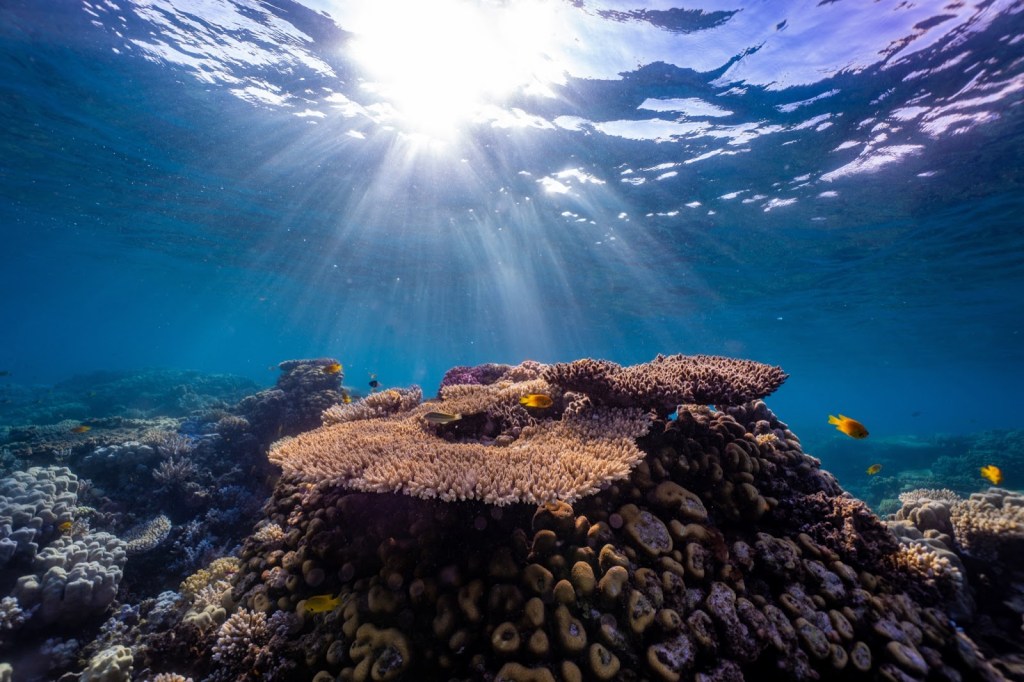
Figure 3. Skeletons formed by individual corals via the calcification process form the 3D structures of the coral reefs. Photo by Helena Villela. Red Sea, NEOM, Saudi Arabia.
Unfortunately, environmental stressors like heatwaves and pollution can disrupt these symbiotic relationships. Coral bleaching, for instance, occurs when zooxanthellae are damaged by stress and expelled from coral cells. Without their photosynthetic partners, corals lose their color, revealing their white skeletons. Similarly, disruptions in coral-bacterial relationships, known as dysbiosis, can severely harm corals, even though these changes are not visibly apparent at first.
If environmental conditions do not improve and symbiotic relationships are not restored, corals will likely die. Therefore, protecting and conserving coral reefs requires considering these tiny but essential symbionts. Fortunately, researchers and restoration practitioners are exploring ways to use symbionts as tools to enhance coral resilience during stress events—a topic worthy of further discussion. Indeed, as Antoine de Saint-Exupéry wrote in The Little Prince, “What is essential is invisible to the eye.”
References:
Peixoto, Raquel S., et al. Coral probiotics: premise, promise, prospects. Annual Review of Animal Biosciences 9.1 (2021): 265-288.
Xu, Y., et al. Understanding of remora’s “hitchhiking” behaviour from a hydrodynamic point of view. Sci Rep 11, 14837 (2021). https://doi.org/10.1038/s41598-021-94342-x
 Reefbites
Dear Helena Villela,
I sincerely appreciate your insightful article, The Invisible Partners: How Symbionts Build Coral Reefs. Your detailed explanation of symbiotic relationships, particularly within coral ecosystems, beautifully highlights the complexity and importance of these interactions. The discussion on mutualism, obligate relationships, and the crucial role of coral microbiomes was both engaging and informative. I especially found your emphasis on how symbionts contribute to reef-building and resilience under environmental stressors to be highly relevant to ongoing conservation efforts.
Additionally, I was particularly impressed by the visual representations used in the article. The infographics and images effectively illustrate key concepts, making the information accessible to a wider audience. I would love to request permission to use some of these infographics for educational and conservation outreach purposes within my organization, MarineLife Alliance. Kindly let me know the process for obtaining permission and proper attribution.
Once again, thank you for sharing your expertise and shedding light on this critical aspect of marine ecology. I look forward to your future work!
Best regards,
M Zahirul Islam
LikeLike
What an amazing article! Congratulations!
LikeLike
Um trabalho lindo e muito importante! Parabéns!
LikeLike