
In 2015, Brazil faced one of its biggest environmental disasters with the collapse of the Mariana mining dam, which sent tons of mining waste down the Doce River and into the Atlantic Ocean. Communities along the coast and scientists braced for the worst, fearing irreversible damage to Brazil’s marine ecosystems. At the time, one question arose: How could this sudden pulse of iron pollution affect reef fish?
To answer this question, a recently published work led by Juliana Andrade experimented to assess the effects of a gradient of iron concentrations on the behaviour of the Brazilian damselfish Stegastes fuscus. Small but notoriously territorial, this widely distributed species acts as a “gardener,” defending its patch and influencing the growth of algae and corals. If pollution disrupted its behavior, the ripple effects could be felt across the entire reef. I talked to Juliana to understand the implications of her work.
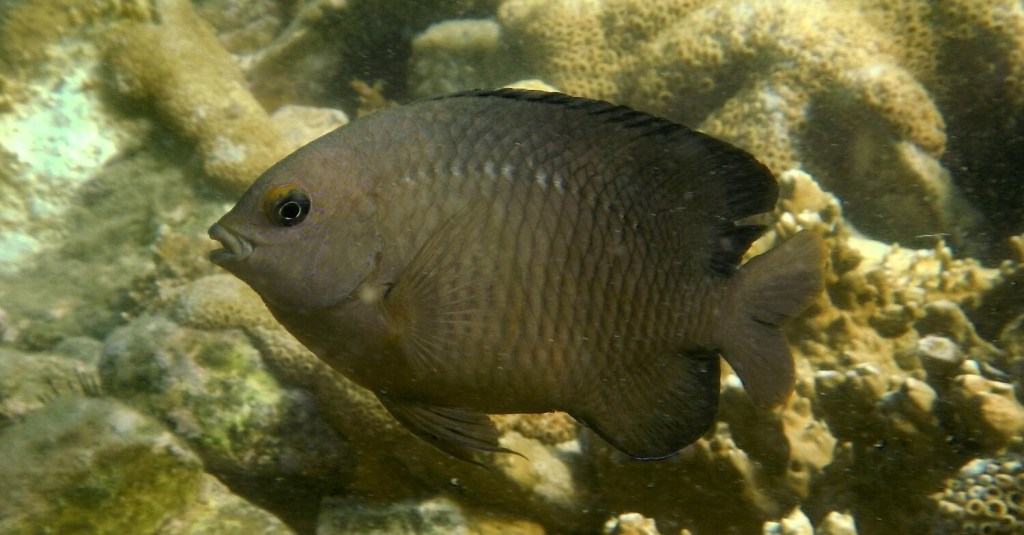
Figure 1: The Brazilian Damselfish Stegastes fuscus. Credit: Adam Carvalho.
The unexpected results
Juliana and her colleagues exposed juvenile damselfish to a gradient of iron concentrations in controlled tanks for 28 days, from natural background levels to the extreme values recorded in the ocean right after the dam disaster. Cameras tracked every move, focusing on three key behaviors: habitat use, feeding, and agonistic behaviour. However, the results did not match the expectations. “The outcomes were contrary to what we anticipated,” says Juliana. “Based on previous studies, we expected differences in behavior at higher iron levels, especially in swimming activity or shelter use. But that did not happen.” Across all treatments, fire coral (Millepora alcicornis) remained the preferred refuge, and aggression levels remained unchanged.
The only noticeable change appeared in feeding. At the highest iron concentration, the damselfish increased the number of bites on Sargassum. Could this subtle change matter for reef dynamics? Andrade is not confident: “It is possible that shifts in feeding could influence the balance between algae and coral, but this is likely minor compared to other drivers.”
Low accumulation
Another surprise came from the tissue analyses. Despite weeks in iron-rich water, the fish accumulated very little of the metal in its body. “We think there may be physiological mechanisms that help the fish avoid accumulation,” Andrade explains. “Or perhaps 28 days just was not long enough for stronger effects to show up.”
However, the study is not a free pass for iron pollution. In the wild, reef fish rarely face one stressor at a time. Rising temperatures, sedimentation, nutrient runoff, and coastal development interact with pollutants in complex ways. “Iron might interact with these other pressures in ways our study could not capture,” Andrade warns. “That is why longer-term, multi-stressor experiments are so important.”
From science to policy
The findings also carry practical weight. Mining disasters are often judged by their immediate damage, but the subtler impacts on behavior and species interactions can be harder to detect. Juliana believes this work can help guide monitoring and management in affected areas. “Understanding how pollution affects key species is essential for coastal conservation,” she says. “We still need more evidence, but studies like this point us toward the risks that matter most.”
In the end, the story of iron pollution and damselfish is not one of disaster, but of nuance. Iron alone may not destabilize a reef, but in combination with other human pressures, it becomes part of a larger threat. The resilience of Stegastes fuscus offers hope, but as Andrade reminds us, hope must be taken cautiously.
References
Andrade, J., Vidal, T. J., Bianchini, A., Costa, P. G., Lacerda, C., Mies, M., … & Francini-Filho, R. (2025). Iron pollution has minor impacts on the behavioral ecology of the Brazilian endemic reef damselfish Stegastes fuscus. Marine Environmental Research, 107435.
 Reefbites