
Photo credits: Ma Ti – Unsplash
The National Oceanic and Atmospheric Association (NOAA) confirmed in April 2024 that we are in the midst of the fourth global coral bleaching event, which has been ongoing since January 2023. The Coral Reef Watch states that from January 2023 to May 2025, bleaching-level heat stress has impacted 83.9% of the world’s coral reef area and mass coral bleaching has been documented in at least 83 countries and territories. This fourth global coral bleaching event started even before a major El Niño event, which is unusual. El Niños usually warm the oceans, and bleaching events have been accelerated by them in the past. However, not so this time. This early onset suggests that our oceans are already too heated from long-term climate change, not just short-term natural changes. The fourth global coral bleaching event has impacted all major ocean basins – hence, it is classified as a global coral bleaching event. Furthermore, it’s worse than ever before in some places. A new warning level, “Alert Level 5,” was added to the Bleaching Alert scale because some areas are so severely affected that they see corals dying immediately, not just bleaching with the potential to recover.
In May 2024, the leading experts in coral reef science published an editorial in the journal “Coral Reefs” stressing the importance of intervention. They focused on the urgency of measures that need to be taken today. The scientists who wrote the editorial urge our governments to take action immediately by reducing carbon emissions, by supporting coral reef restoration projects, and by funding science projects that share knowledge globally. This coral bleaching event is a wake-up call. Coral reefs are in serious trouble, and they need help—from scientists, governments, and the public—if they’re going to survive in a rapidly warming world.
“I want you to panic,” said Greta Thunberg, a young climate activist from Sweden, who is known globally for igniting the climate movement across the globe in 2018. And I think that’s more accurate now than ever.
For so long, I have not understood how most scientists remain neutral in the face of climate change. We research, we write, and we get funding for more research, and we write more. Every time we publish a paper, it goes along the lines of “corals are threatened by climate change, and we need to curb emissions immediately.” I’ve read this kind of sentence in every single paper coming out about coral reefs in the last decades. On days when I read multiple papers, I get frustrated with this repetition of the same statement. Over and over again, we acknowledge that more needs to be done, and we appeal for more measures to be taken against the temperature rise.
But, when are we ever going to actually do something about the climate crisis? And treat it as the outraging catastrophe that it is? Rather than researching ways in which the planet might or might not adapt, what measures might or might not work to mitigate the temperature rise, which ways might or might not be effective in keeping the rising sea level from destroying coastlines in the Netherlands or from sucking away at whole islands like the Maldives.
Science is supposed to be neutral. Scientists have been doing a delicate dance to come to conclusions about the facts. However, I believe that time has passed. When it comes to a crisis like climate change, there is no staying neutral. We need to be outraged. We need to scream and make our voices heard. We need to get organized and start thinking about the world we want to live in.
In 2022, I read an article about scientists cryopreserving sperm of Great Barrier Reef (GBR) corals. Since 2011, what scientists have tried in Australia is now reality: Every year they freeze sperm from the annual spawning event on the GBR and store them in tanks filled with liquid nitrogen at the Taronga zoo in Sydney. They have now successfully fertilized fresh eggs with frozen sperm, producing viable offspring that they re-introduced to the reef. So far, they have stored sperm of 34 key species from the GBR to re-wild reefs threatened or even devastated by climate change in the future.
Scientifically, this is amazing. Politically, this is a disaster.
Why do I say this? It means that, what once was a Doomsday scenario, has now become the new normal. We’re so accustomed to the world being on fire that we brush this kind of news off as if it were a story about the new mall that just opened around the corner.
Let me be clear: I believe it is awesome that so many people in so many disciplines are working hard to try to find ways to preserve our biodiversity or help species adapt to the changing climate. But while people are hustling, politicians and stakeholders are taking their private jets out for a spin. Fighting a pending catastrophe should not be the responsibility of the people who didn’t bring about the disaster in the first place. It should be the responsibility of those that thrive off of taxes and subsidies while millions of people starve or are displaced because the climate catastrophe has made their homes unlivable.
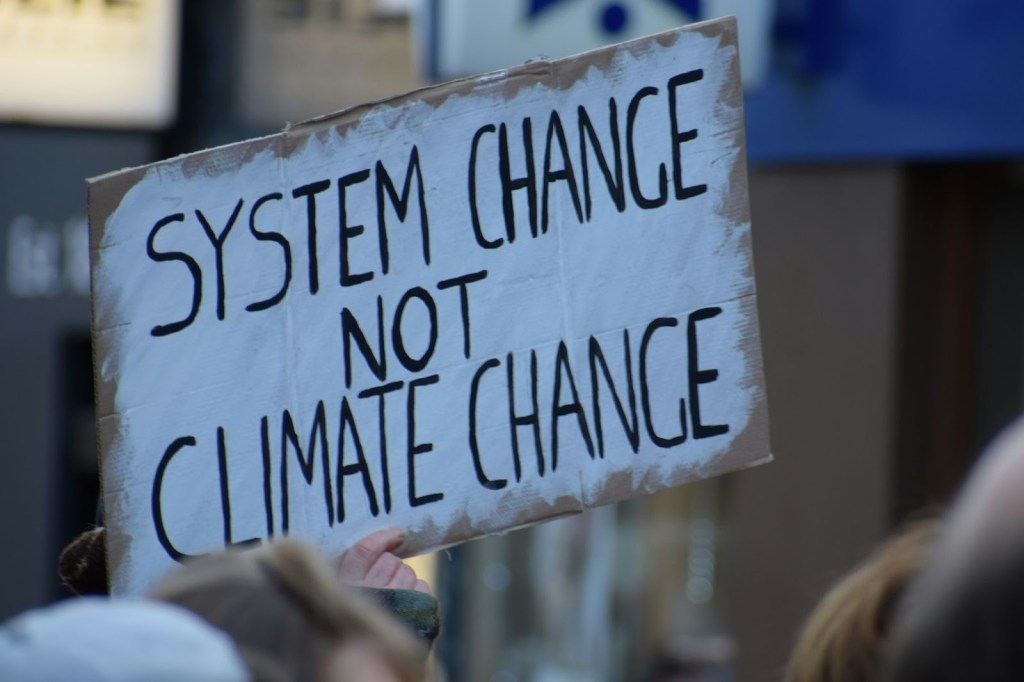
However, we cannot expect the people upholding the system to change the system so drastically that it brings justice to all people. We therefore must think of ways to change the system collectively, rather than simply try to be better within it.
References:
Reimer et al. (2024): https://link.springer.com/article/10.1007/s00338-024-02504-w
 Reefbites