
by Rachel G. Jordan
In the heart of tropical Puerto Rico, a new coral nursery prepares to break ground. But in order to fully appreciate this event, we must dive into a clearer understanding of what coral nurseries are and how they function. As coral reefs around the world face a myriad of problems (climate change, ocean acidification, pollution, disease, hurricanes, etc.), restoration endeavors are more important than ever. Nurseries are often perceived as one of the most critical components of reef restoration, for it is in the cozy confines of nurseries that baby corals can peacefully live out their early years before taking their first “step” into the great blue unknown.
Cultivating Corals:
Functioning much like plant nurseries, coral nurseries are special locations dedicated to the cultivation of young corals, helping them survive into maturity, where they can then be outplanted. Outplanting is the process whereby a coral is “planted” to be incorporated into a reef.
As you might imagine, a significant amount of work is required to effectively maintain a coral nursery. First, the nursery must be built. Second, it must be filled with coral fragments. Third, it must receive regular maintenance to ensure that the corals remain healthy, pests species are kept away, and marine algae does not overgrow tender colonies. Fourth, the essential element of time must work its magic to let the corals grow. Finally, the nursery must have its contents outplanted. When the corals come of age (usually indicated by when they reach a satisfactory size), they are taken to a historical reef site in need of restoration and secured to the substrate (the seafloor) using a variety of methods, such as nails and zipties or two-part epoxy.
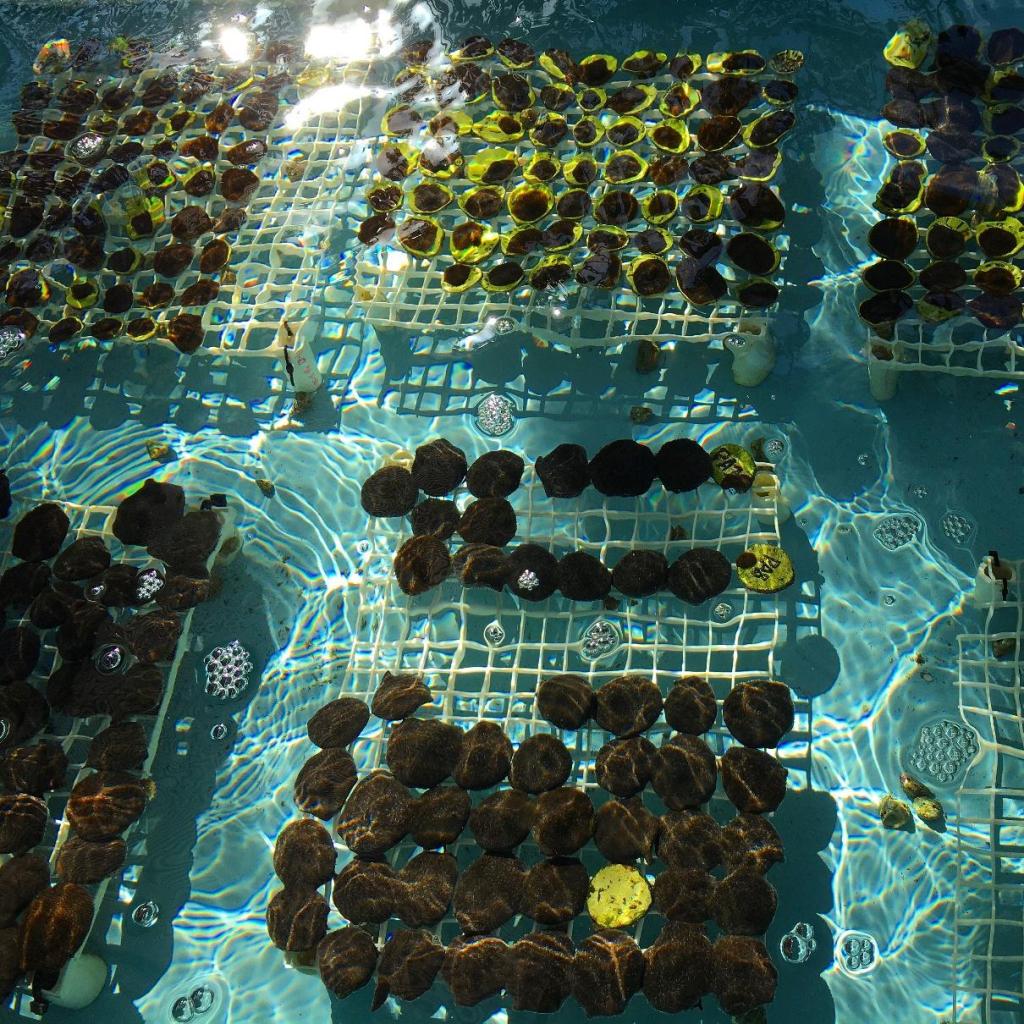
Figure 1. Oribicella coral species are grown on pucks in an ex situ nursery. (Photo courtesy of Rachel G. Jordan)
In situ vs. Ex situ:
Notably, there are two distinct kinds of coral nurseries: water-based in situ nurseries and land-based ex situ nurseries. While in situ nurseries are advantageous for their ease of outplanting, they are relatively challenging in other regards. After all, this kind of coral nursery dwells in the ocean! Accessibility typically requires boat travel, scuba equipment, and specially trained divers. Hurricanes are a potential problem. Also, the presence of pest species and colonizing algae are pervasive issues. Ex situ nurseries reverse these strengths and weaknesses. Outplanting requires more planning and effort, but accessibility, safety, and environmental control are highlight points. As if the contrast between in situ and ex situ isn’t exciting enough, as methods of outplanting and raising corals are expanding the horizons of modern reef restoration, new nurseries are cropping up around the world!
Highlighting a New Nursery:
With profoundly intentional planning, deep community support, and a determined holistic approach, the Coral Nursery of Puerto Rico is breaking ground on its first ex situ site this Earth Day, April 22 of 2025. Like its predecessors, its mission is to restore and conserve reefs. But the many unique attributes of this particular nursery warrant it special attention. The Coral Nursery’s founder, Marissa Myer (a coral-loving, business-savvy entrepreneur), explains this best. “By harnessing cutting-edge methodologies, educating the community, and fostering partnerships, we strive to revive coral ecosystems, safeguard marine biodiversity, and inspire stewardship of our oceans for generations to come. We exist not only to heal the reef but also to empower people.”

Figure 2. Official logo for the Coral Nurser of Puerto Rico.
The Coral Nursery of Puerto Rico’s holistic approach is its strength, combining science, education, community engagement, and coral restoration into a highly accessible facility at the Palmas Academy, a local school. As opposed to other restoration projects that focus purely on reviving reefs and pursuing science, the Coral Nursery will endeavor to grow both coral and community stewardship.
Scientific Strengths:
That said, the Coral Nursery is thoroughly dedicated to real-world science. Using “micro fragmentation,” a hobbyist technique first put into practice on a mass scale for restoration by Dr. David E. Vaughan, the Coral Nursery reasonably predicts being able to grow corals 25 to 40 times faster than corals naturally grow in the wild, or in situ. Innovative methods are matched by a custom-designed facility. Marissa notes that their land-based nursery is “equipped with a fully recirculating water system, chillers for each tank to ensure optimal coral health, solar power for sustainability, and a robust filtration system to maintain clean, stable conditions.” Staff also plan to curate a collection of coral species that are less susceptible to endemic diseases, such as Stony Coral Tissue Loss Disease (SCTLD), in hopes of increasing the long-term resilience of outplants.

Figure 3. Marissa Myer, founder of the Coral Nursery of Puerto Rico, with a display for the nursery. (Photo courtesy of Marissa Myer)
The Next Generation:
At a time when coral reefs around the world are struggling, organizations like the Coral Nursery of Puerto Rico give us hope for a brighter future. With a ground breaking event underway and a grand opening planned for late summer of this year, the Coral Nursery will begin growing the next generation of corals and aspiring coral scientists at the Palmas Academy – and all are invited! “Every donation, every volunteer hour, and every coral counts. Come visit us in Puerto Rico!”
For more information about the Coral Nursery of Puerto Rico, visit https://www.coralnursery.org. For inquiries, email info@coralnursery.org.
 Reefbites