
Author: Ellie Casement
Edited by: Miranda Spencer Altice
Signs in public parks remind pet owners, “Clean up after your pet.” The dreaded chore of any child is pooper scooper duty, and stepping in dog feces is a sure way to put a damper on your day. In our world, feces are synonymous with waste and are seen as something foul to dispose of.
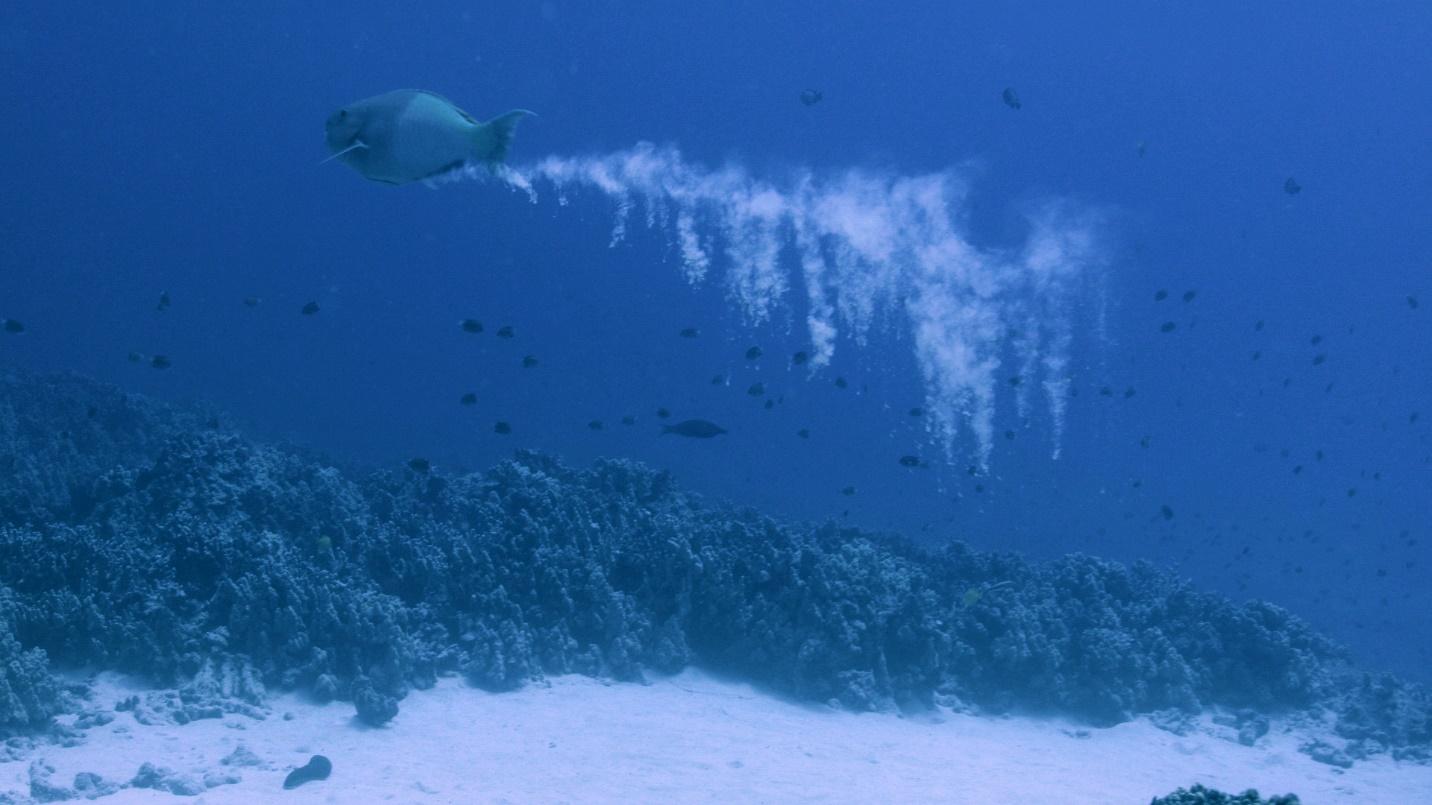
Under the sea, poop takes on a different significance. Fish do their business wherever and whenever, which has innumerable benefits for our oceans. Fish feces contribute to white sand beaches (Milks, Cloud, & Fuller, 2023), carbon sequestration in the deep sea (Bianchi et al., 2021), and, as new research suggests, the natural restoration of reefs. A study by researchers at Rice University investigated the feces of coral-eating fish as a potential mechanism for spreading the beneficial microbiota that live in coral tissues. They found that poop functions as a reservoir for these coral symbionts, and the daily activities of coral-eating fish facilitate the dispersal of these cells to corals across the reef.
Background
Stony corals rely on a symbiotic relationship with single-celled algae from the family Symbiodinieaceae to construct reefs. These algal “symbionts” provide food to the coral via photosynthesis (Roth, 2014), and in return, the coral provides the symbionts a home within its tissues. Most corals acquire symbionts from the surrounding environment as juveniles to grow and survive (Baird, Guest, & Willis, 2009). Corals may also need to replenish their microbiomes later in life after stressful events, which can cause the death or expulsion of symbiotic algae (Lewis & Coffroth, 2004). However, little is known about where and how corals find Symbiodiniaceae cells to partner with at any stages in their life.
Corallivorous fish are fish that feed on corals. As they forage on coral tissues, corallivores consume countless symbiont cells. Depending on the survival of the symbionts through the digestive process, the algal cells may be resupplied to corals around the reef through fish feces (Parker, 1984). This paper explores different species’ poop as potential reservoirs for living algal cells and the dispersal services coral-eating fish may provide.
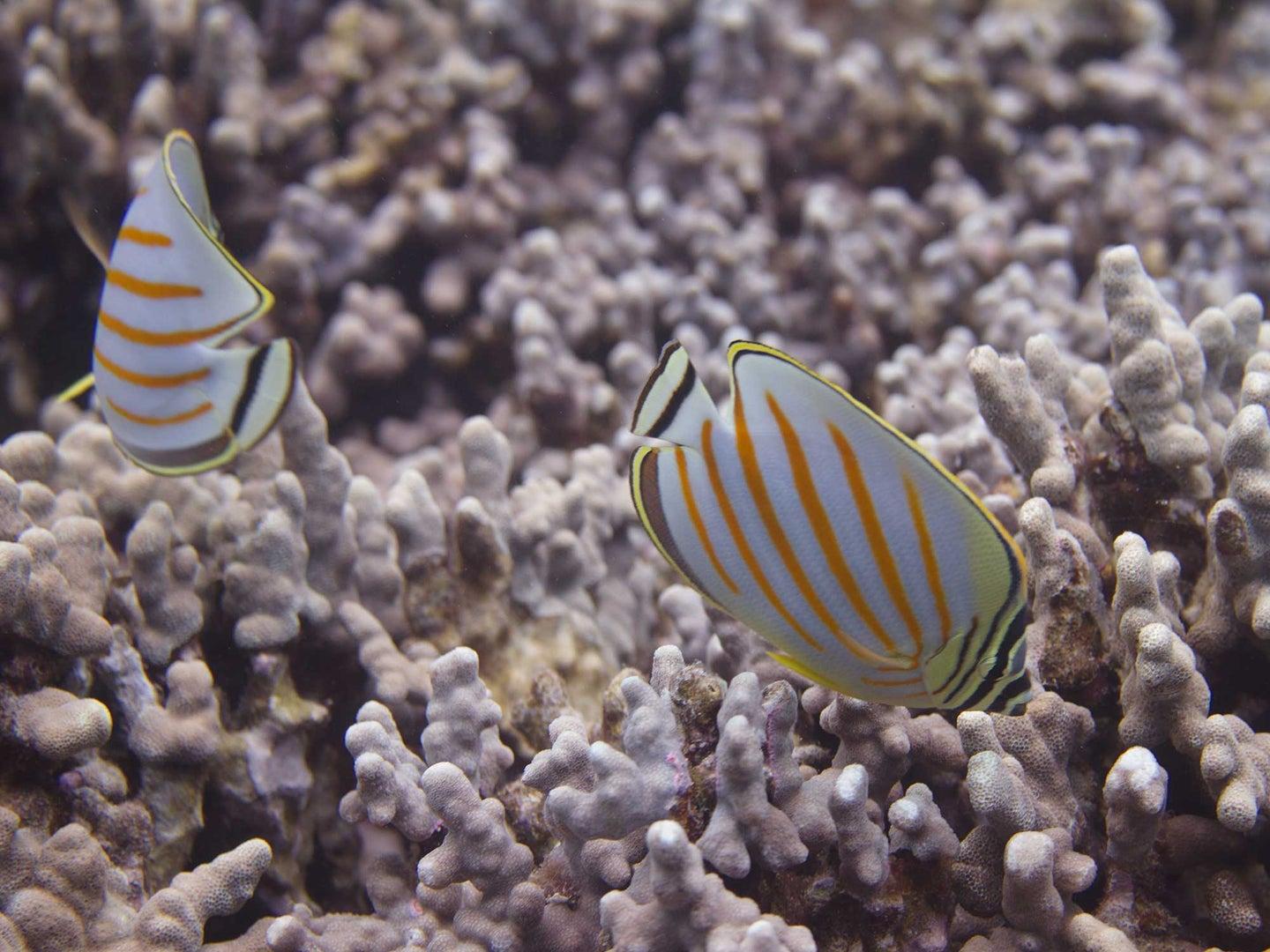
Figure 1: As ornate butterflyfish feed on coral polyps, they also consume the algal symbionts living within the coral’s tissues. DEPOSIT PHOTOS
Methods
In 2019, researchers from Rice University visited the island of Mo’orea in French Polynesia to collect fish from nine different species and samples from corals, sediment, and seawater. The fish species were categorized into three groups:
Obligate corallivores: species who eat only coral (or mostly coral)
Facultative corallivores: species who eat some coral, along with other foods
Grazers: species that eat algae or dead material and may accidentally ingest small amounts of coral
Feces were extracted from each fish, and live symbionts were counted and compared to the amounts found in the environment (water and sediment) and living coral tissue. The researchers also sequenced the genetic material of the symbionts to determine what types were found in different samples. The extracted symbionts were grown in the laboratory to determine their survival after digestion.
Findings
The study found that the feces of coral-consuming fish serve as a hotspot of live algal symbionts, with much higher concentrations of symbiont cells in stool samples, particularly obligate corallivores, compared to the surrounding environment. The feces of obligate corallivores contained 100,000-1,000,000 times more symbiont cells than sediment and seawater!
he poop of obligate corallivores contained similar communities to two local types of coral, which these fish species were observed feeding on. In contrast, the poop of facultative corallivores contained similar symbiont types as those found in the seawater and sediments, and was distinct from the communities of symbionts found in samples from obligate corallivores and coral tissues.
The researchers combined the live symbiont counts with field observations of egestion (pooping) rates, fecal pellet size measurements, and fish abundances for several species to model the dispersal of symbiont cells across the reef-scape. They calculated that corallivorous fish release millions of live symbionts per 100 m2 of reef per day. In areas of the reef with high coral cover, over 90% of released feces came in direct contact with corals as it settled, thus acting as a potential mechanism for symbiont transfer among corals.
Why does poop matter?
The findings of this study suggest that coral-eating fish may play an important role in dispersing algal symbionts across coral reef habitats. The fecal matter could deliver symbionts directly to corals by contact or other environmental reservoirs (i.e. the sediment or sea water) as they disintegrate.
Stool-supplied symbionts could be especially important for corals lacking their algal partners, such as young corals and/or corals recovering from stress. These corals may need to acquire new Symbiodiniaceae populations from their environments to survive and grow. The researchers suggest further experiments to test whether adult coral colonies that have lost symbionts (such as during bleaching, when stressed corals expel some or all their algae) regain their symbiont partners faster when exposed to algae-rich corallivore poop.
Conclusions
In a world facing warming temperatures, acidifying waters, diseases, and pollution, reefs encounter increasing frequencies and intensities of stressful events. The dispersal of beneficial microorganisms via reef fish egestion may play an important role in aiding the recovery and survival of corals. The researchers suggest this behavior could serve as a “routine, global-scale restoration effort” that supplies corals with natural probiotics from their neighboring colonies.
The paper highlights the importance of conserving reef fish populations in the face of overfishing and habitat degradation. In an era of intensive, human-led coral restoration efforts, it becomes imperative to protect the organisms that facilitate the daily, natural restoration of reefs. While the image of fish excrement may not evoke the aesthetic appeal associated with artificial reefs and nurseries, this research highlights the indispensable role played by reef fish as they respond to the inherent calls of nature.
Read the article here:
Grupstra, C. G., Rabbitt, K. M., Howe-Kerr, L. I., & Correa, A. M. (2021). Fish predation on corals promotes the dispersal of coral symbionts. Animal Microbiome, 3, 1-12.
References
Baird, A. H., Guest, J. R., & Willis, B. L. (2009). Systematic and biogeographical patterns in the reproductive biology of scleractinian corals. Annual Review of Ecology, Evolution, and Systematics, 40, 551-571.
Bianchi, D., Carozza, D. A., Galbraith, E. D., Guiet, J., & DeVries, T. (2021). Estimating global biomass and biogeochemical cycling of marine fish with and without fishing. Science advances, 7(41), eabd7554.
Lewis, C. L., & Coffroth, M. A. (2004). The acquisition of exogenous algal symbionts by an octocoral after bleaching. Science, 304(5676), 1490-1492.
Milks, K., Cloud, F. B., & Fuller, K. S. (2023). Coral Reefs: A Natural History.
Parker, G. M. (1984). Dispersal of zooxanthellae on coral reefs by predators on cnidarians. The Biological Bulletin, 167(1), 159-167.
Roth, M. S. (2014). The engine of the reef: photobiology of the coral–algal symbiosis. Frontiers in microbiology, 5, 422.
 Reefbites