
Article by: Ellie Casement
Stark white corals dotting a colorful reef scene are unfortunately common images in today’s news and media. However, the dusky lighting from photos of a recent bleaching event reveal its unexpected location – the twilight zone.
A paper by Clara Diaz and colleagues from University of Plymouth, which was published in October 2023, describes a bleaching event that occurred in the Chagos Archipelago in 2019. The study found evidence of bleaching on mesophotic reefs between 60-90 m, making it the deepest bleaching event ever reported.
Background
What is coral bleaching?
Coral bleaching is a phenomenon usually documented on shallow reefs during extended periods of unusually warm water. The threshold for “unusually warm water” varies by region, but is generally characterized as >1°C above the mean summertime sea surface temperature. Bleaching is a stress response, in which a coral expels the microscopic symbiotic algae, known as zooxanthellae, that live within the animal’s tissues (Lesser, 2011). Zooxanthellae provide the coral with food through photosynthesis. Without their colorful algal partners, a coral’s white skeleton is visible through its translucent tissue. These “bleached” corals are at greater risk of starvation, disease, and death.
What are mesophotic reefs?
Mesophotic coral reefs lie between depths of 30-150 m, and at this depth they receive less light and heat from the sun and atmosphere (Lesser, Slattery, & Leichter, 2009). These cooler “twilight zone” reefs were long assumed to be similar habitats to their shallow counterparts. However, recent exploration of deep reefs has shown them to be unique and valuable ecosystems in their own right (de Oliveira Soares et al., 2020). Because of their depth, mesophotic reefs are thought to be protected from dramatic temperature shifts experienced in surface waters (Glynn, 1996).
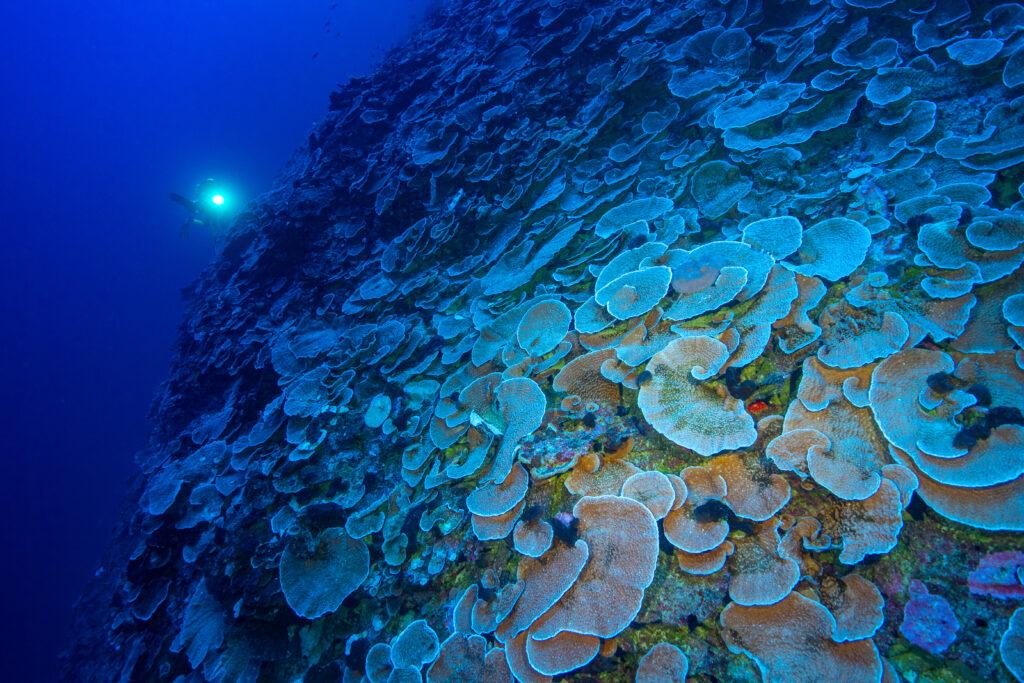
Figure 1: Mesophotic coral reef ecosystem. Julien Leblond, Under the Pole.
Methods
The study took place in the Chagos Archipelago, a small collection of islands in the Indian Sea. In November 2019 and March 2020, remotely operated vehicles took high-resolution photos and videos of the reefs across a range of depths (15-90 m). These images were combined with measurements of water characteristics such as depth and temperature, as well as model simulations of different ocean conditions over space and time. The researchers assessed coral bleaching with two metrics:
Prevalence – the percentage of corals on the reef that were bleached.
Severity – the extent of bleaching for an individual coral
Findings
During November, researchers documented both widespread prevalence and severe bleaching of coral reefs between 60-90 m. In some areas, researchers reported that almost 80% of corals showed signs of bleaching. Meanwhile, all was normal on neighboring shallow reefs. Virtually no bleaching was detected in the 15-20 m zone and surface temperatures were typical of the season. The bleaching on deep reefs also escaped the notice of risk assessment programs and models aimed at predicting thermal stress and bleaching events on reefs around the world.

Figure 2: Bleached corals observed on the seafloor in Indian Ocean. University of Plymouth.
Why did deep reefs bleach?
This bleaching event was likely caused by a 30% increase in sea temperatures within upper layers of the thermocline, which is the transition zone between warm surface waters and cooler deep waters. During this period, sustained easterly winds blew across the Indian Ocean, causing strong currents to mix warm surface waters deeper and depress the thermocline from 60 to 140 m. As temperatures climbed from 22 °C to 29 °C within the thermocline zone, corals accustomed to cooler waters became stressed and bleached. By March, the thermocline had returned to more typical depths between 40-50 m, and the reef had started to recover.
Conclusions
This study demonstrates the perils facing deep reefs, which were previously thought to be out of harm’s way. It also shows conditions causing bleaching on shallow reefs may be very different from those on nearby deep reefs. While surface temperatures can be used to predict shallow bleaching events, deep reefs are affected by less obvious factors that affect the water column.
Based on these findings, mesophotic reefs around the world likely undergo many bleaching events – even when all appears normal above. The vulnerability of these habitats demonstrates how shifting climate regimes impact areas of the ocean far beyond what we see from the surface. Continued exploration and research within the mysterious twilight zone will give insight on the perils facing deep reefs, and how we can best conserve them in the face of environmental change.
Read the article here:
Diaz, C., Foster, N. L., Attrill, M. J., Bolton, A., Ganderton, P., Howell, K. L., … & Hosegood, P. (2023). Mesophotic coral bleaching associated with changes in thermocline depth. Nature Communications, 14(1), 6528.
References:
Lesser, M. P. (2011). Coral bleaching: causes and mechanisms. Coral reefs: an ecosystem in transition, 405-419.
Lesser, M. P., Slattery, M., & Leichter, J. J. (2009). Ecology of mesophotic coral reefs. Journal of experimental marine biology and ecology, 375(1-2), 1-8.
Glynn, P. W. (1996). Coral reef bleaching: facts, hypotheses and implications. Global change biology, 2(6), 495-509.
de Oliveira Soares, M., de Araújo, J. T., Ferreira, S. M. C., Santos, B. A., Boavida, J. R. H., Costantini, F., & Rossi, S. (2020). Why do mesophotic coral ecosystems have to be protected?. Science of the Total Environment, 726, 138456.
 Reefbites