
By Danielle Moloney
Edited by Jasmine Haskell
Featured Image:
Introduction
Coral reefs are some of the most popular tourist attractions for countries around the globe. These regions are usually accompanied by warm weather and a lot of sunshine. As tourists flock to reefs and take a dip in the ocean to see what’s below the surface, they bring along an uninvited visitor: sunscreen! Sunscreen is recommended to protect our skin from harmful ultraviolet (UV) rays that can lead to serious health issues. It works by using compounds such as oxybenzone to block UV rays. However, this is a double-edged sword when it comes to reefs: while humans need sun rays to be blocked, coral reefs rely on sunshine to fuel the photosynthetic algae (zooxanthellae) living within their polyps. When people swim near reefs, sunscreen leeches off of their skin and can block the sun from reaching the corals below. This can often lead to coral bleaching and mortality. Furthermore, corals can absorb the small molecules that make up most sunscreens, which causes internal harm to the animal.
A new study by Zeng et al. developed a new type of sunscreen that had minimal impact on skin, algae, and corals. By creating a large-molecule polymer, they were able to protect skin from UV ray-induced burns while also keeping the corals safe from absorbing the material.
A ray of hope
Zeng et al. used new synthetic polymers, created in their lab, to test whether they could effectively block harmful UV rays. A polymer is a substance that is primarily made up of many molecules with a similar structure bonded together. Their goal was to create a new option for sunscreen that wouldn’t cause inadvertent harm to the environment. Most current sunscreens enact small molecule structures to block out rays; Zeng et al. tried making a large molecule structure that would be too big to be absorbed into human skin or into marine life such as corals and algae.
To test their new material, the researchers exposed mice treated with a variety of different topical solutions and examined the extent of “sunburn” that followed. All institutional guidelines for the care and use of research animals were followed in this process. They also exposed corals to seawater with the same materials added and analyzed them for deterioration or bleaching.
They found that the large-molecule P(3) polymer that they created reduced sunburn significantly more than in untreated mice, or even in mice treated with oxybenzone, a common active ingredient in most sunscreens(Figure 1). They also found that P(3) did not cause any bleaching in corals, whereas oxybenzone caused complete bleaching by day 6 of exposure (Figure 2). These findings are promising for the future of skin protection for those who plan to swim, especially near reefs.
A concern with the new polymer from Zeng et al. is that it is not biodegradable. The main chain in the substance cannot biodegrade, though alternative polymerization methods (such as creating a ring structure) may avert this issue. Further research should assess how to tackle this issue and whether combining the polymer with other compounds may make it more suitable to degrade naturally in the environment.


Conclusions
Commercially available sunscreens pose a threat to both human and environmental health. Their small molecule structure makes them easily absorbed by human skin and has been shown to pose health risks for users as a result. For example, a compound in oxybenzone sunscreen, benzophenone-3, is a suspected hormone disruptor. However, humans need to use sunscreen to protect their skin from harmful UV rays. Furthermore, these compounds can penetrate reefs, algae, and other marine life to cause harm and sometimes lead to mortality. Using a new type of large-molecule polymer presents a promising solution to current issues with sunscreen use. The findings here may lead to a new generation of more environmentally suitable sunscreens.
Read the full study from Zeng et.al here.
Please contact the author with any questions: dmoloney@fandm.edu.
 Reefbites
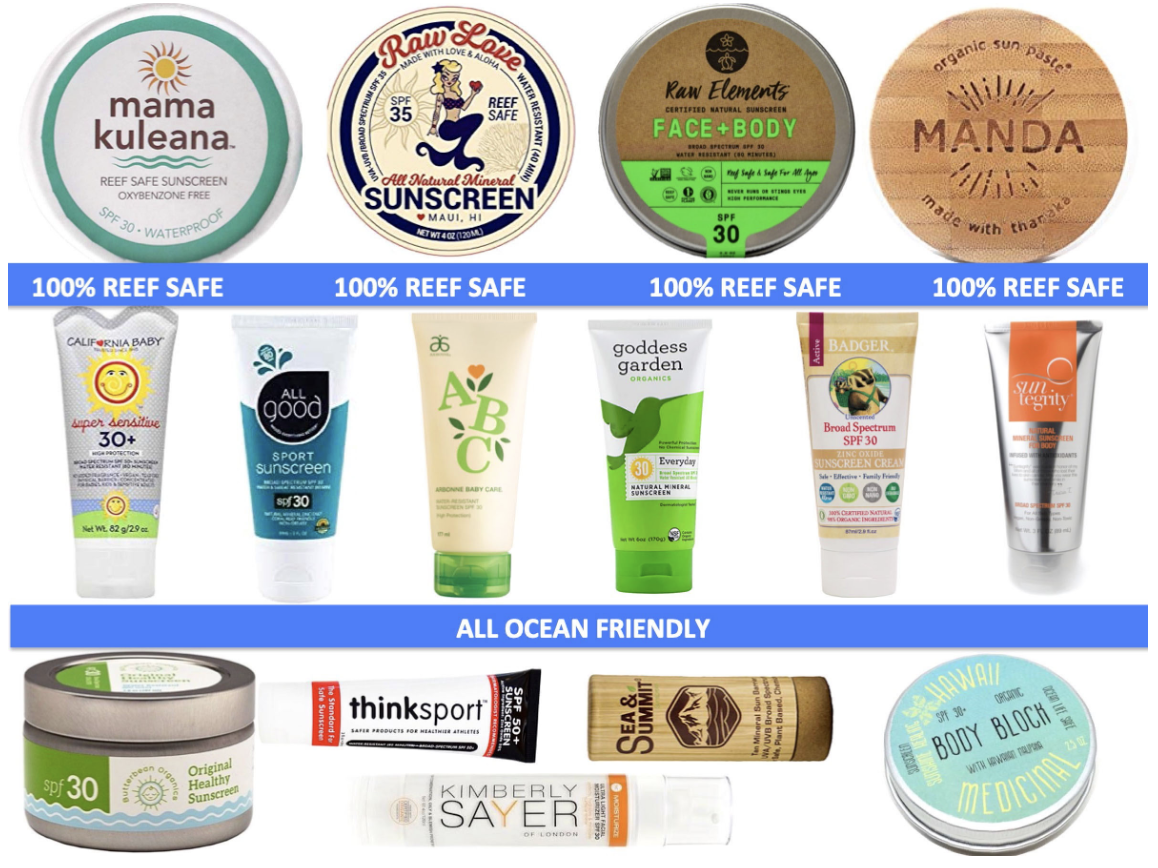
It would also be useful to discuss the widely available mineral sunscreens, namely Zinc and Titanium Oxides, which are much less damaging to corals. Some of them are pictured in the article’s intro photo.
LikeLike